What does one portion look like?
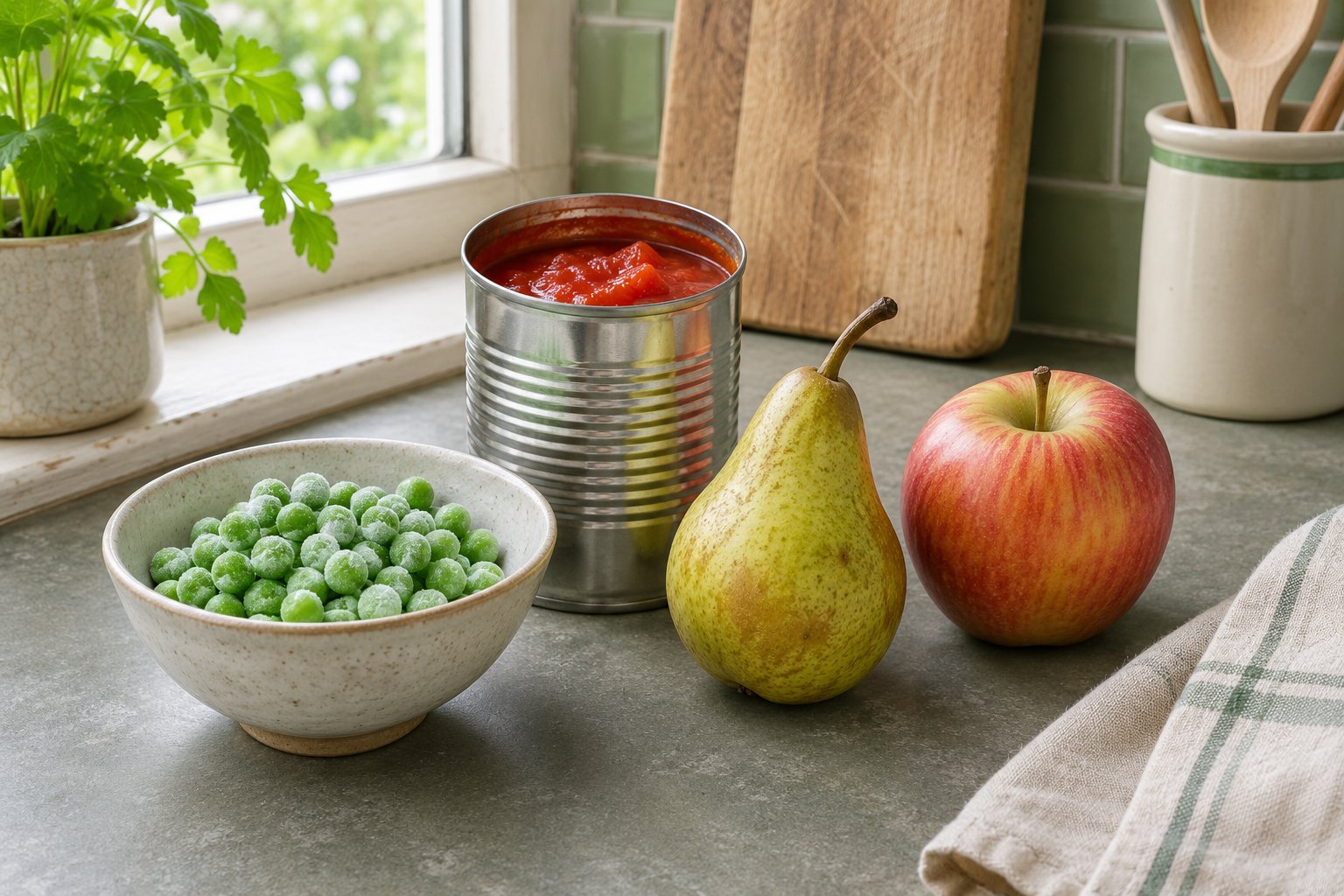
The NHS recommends at least five portions of a variety of fruit and vegetables each day. Your freezer and cupboard can help as much as the fresh produce aisle. If you have an apple, some frozen peas and a tin of tomatoes, you already have three different foods to work with.
For adults, a portion is generally 80g of fresh, frozen or tinned fruit or vegetables. As a rough guide, an apple or pear counts as one, and so do three heaped tablespoons of cooked peas, carrots or sweetcorn. Choose tinned options packed in water or natural juice without added salt or sugar.
Vegetables in a soup, stew or pasta sauce can count too. If you’re cooking for several people, think about how much ends up in each serving. A 400g tin of chopped tomatoes shared equally between four people gives about 100g of tomato each.
Beans, juice and potatoes have their own rules
For beans and pulses, 80g of cooked lentils, chickpeas or beans counts as one portion. The whole group counts once per day, even if you have more than one kind.
Keep unsweetened fruit juice, vegetable juice and smoothies to a combined 150ml a day. Together they count towards one portion at most. The NHS suggests drinking them with meals to help protect your teeth. A 30g serving of dried fruit also counts as a portion. Have it with a meal, such as sultanas stirred into porridge.
Ordinary potatoes go in the starchy food group. Sweet potatoes, parsnips, swedes and turnips can contribute to your 5 A Day.
Try it with meals you already make
Have a banana with breakfast. At lunch, a tomato and lentil soup can give you two portions if your bowl contains 80g of each. Take a pear to work or have it after lunch. Add three heaped tablespoons of peas alongside your evening meal, and that brings you to five.
Start with the meals you already enjoy. Stir frozen peas into your usual pasta, add a side of swede to a roast or keep a couple of pieces of fruit where you’ll see them when you pack lunch.